What a small business website actually costs in central PA
A senior developer in Lock Haven on what really moves a small business website quote in central PA: content, logins, payments, moving an old site, outside software, and who edits the site after launch. Plus what template subscriptions leave out, and how a fixed-scope quote works.
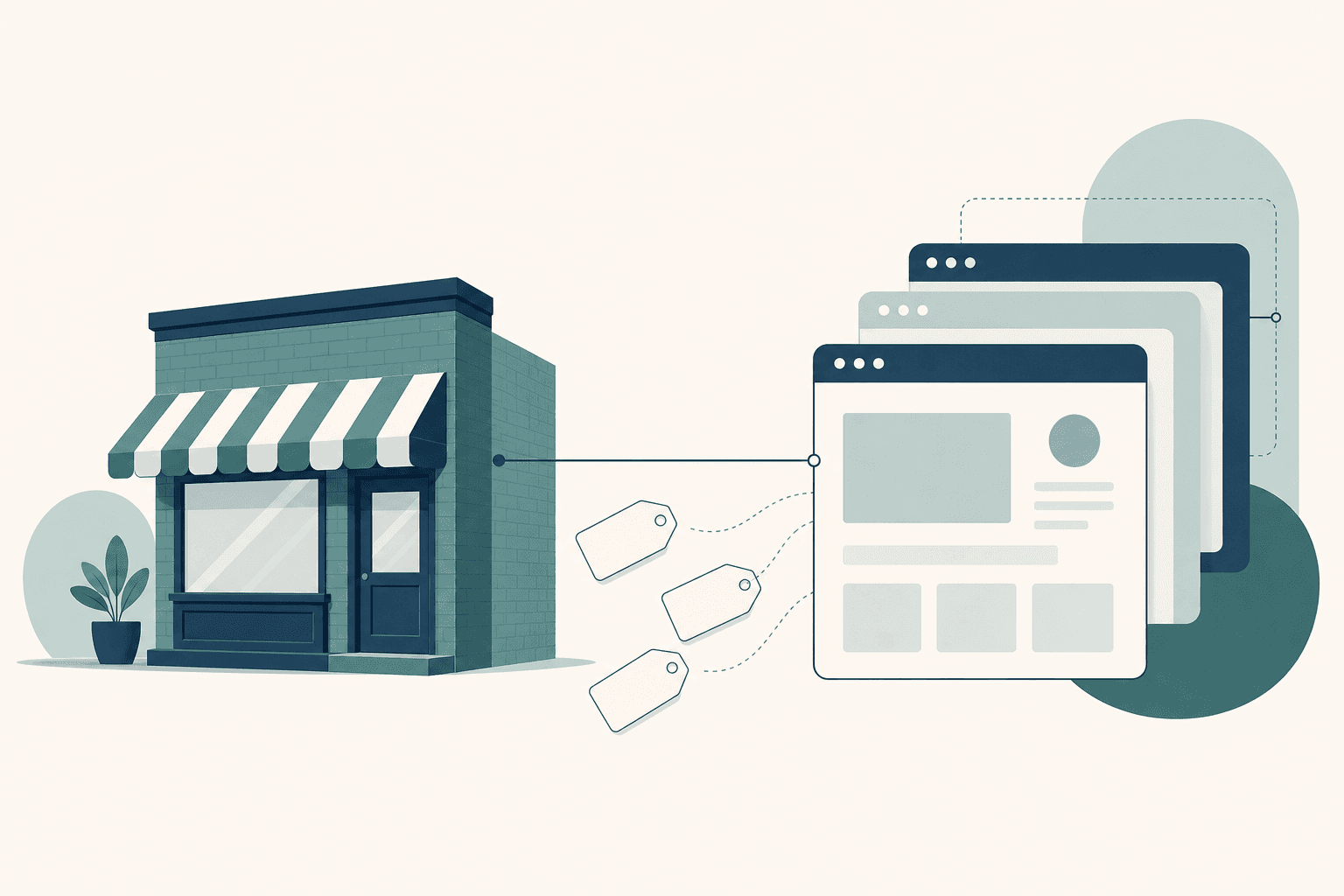
What a small business website costs in central PA follows from what the site has to do. Page count barely moves the number. A site that publishes information is one job. A site that logs people in, takes payments, or holds records that have to stay correct is a different job. Each of those adds a system that can break in new ways.
Key points
- Logins, payments, moving an old site over, and links to other software move a quote more than extra pages.
- Copy nobody has written and photos nobody has taken are the most common hidden cost, and most quotes assume you have both.
- Template subscriptions cover hosting and editing well. They stop where stored records start, and you rent the result the whole time.
- A fixed-scope quote is one number attached to a written list of what is in and what is out. That is how I price, and websites and rebuilds is what the number usually buys.
What actually moves a website quote
Six questions set the number.
Is your content written yet
The most common reason a website project stalls is that the words do not exist. A quote for a five page site assumes five pages of copy come from somewhere. If I write them, that is writing work and belongs in the number. If you write them, the build waits on whoever owns that job internally, and that person already has another one.
Does anyone have to log in
Logins are where the cost curve bends. A public page is a file a server hands out. A login turns the site into an application that tracks who each visitor is and what they may see. Every role needs its own permissions and test paths, because the interesting bug is always a member seeing something only an officer should.
I built the Rotary Club of Downtown Lock Haven site pro bono. It has three roles: admin, officer, and member. Members sign in with magic links, single-use sign-in links instead of a password. Members-only documents go through a download proxy, a permission check before the file goes out. Minutes and bylaws never reach the public.
Does money change hands
Taking payments pulls in a processor, the webhooks it sends back (automatic status messages), charges that half succeeded, receipts, refunds, and reconciliation against your books. GrantCue, the grant platform I built, runs subscriptions through Stripe. Its webhooks carry idempotency keys, markers that flag a repeated message, so a retry cannot bill someone twice.
Is there an old site to move
Migration, moving the old content and web addresses over, goes first on my schedule. It is the step most likely to blow up a launch. The work is clerical: export the content, keep the addresses that work, and redirect the rest one by one. Cost follows what you are leaving. A WordPress install with clean posts and a working export is straightforward. Content buried in page-builder shortcodes, snippets the old builder used to build pages, is an archaeology job first.
What else does the site have to talk to
Every outside system the site connects to is one more thing that can break. A scheduling tool, an email platform, an accounting package, a state portal: each connects through an API, a defined way for two systems to talk. Each will be down at some point, and the work sits in handling that. Two integrations cost more than twice what one costs, because they fail in combinations.
Who maintains it after launch
Who edits the site after launch decides whether you pay once or keep paying. A site with no editing surface is cheaper to build and expensive to own: every text change becomes a request to somebody.
The Rotary site is where I priced this out. Past the standard CMS admin, the built-in editing screen, the site has a separate dashboard for announcements, events, documents, media, members, and form submissions. I built that for officers who took the job for the club and not for the website. The dashboard is a line item, and it keeps a changed meeting time from becoming a support request. Those builds are on the portfolio.
What template subscriptions cover, and where they stop
Template subscriptions cover a narrow set well: hosting, a security certificate, a visual editor, a contact form, and basic analytics, all maintained by the vendor. If your site is a business card with hours on it, that is often the right purchase, and I will say so rather than quote you.
Where they stop is structural. The moment you need stored records instead of pages, you need a database the platform does not hand you: a member directory with per-field privacy, a document library only certain people can open, a booking system with capacity limits. Add-ons that claim to cover those are usually a separate product embedded in your page, with its own subscription.
Ownership is the other gap. You rent the site inside one vendor's system, and the export, where one exists, gives you your content rather than your site.
| Area | Template subscription | Fixed-scope build |
|---|---|---|
| Hosting, certificate, editor | Included, vendor maintained | On accounts in your name |
| Logins and user roles | Limited to what the platform offers | Built around the roles you have |
| Stored records with their own rules | Add-on products embedded from elsewhere | A Postgres database behind the pages |
| Connections to other software | Whatever the app store carries | Built, and handled when they fail |
| Moving away later | Your content exports, the site does not | Code, domain, hosting, database go to you |
| Cost shape | Recurring while you use it | Per project, plus hosting you own |
How a fixed-scope quote works
I quote by project: one number for one written list of work. Nothing gets priced off a form submission. The mapping conversation comes first: who uses the site, what they do today, where the current process breaks. Then a proposal lists what the first release includes, what it leaves out, and what handoff looks like.
Hourly billing puts the risk of a bad estimate on you. That is rough for a five person shop with one office manager. Fixed scope keeps that risk with me. The trade is that scope gets written down before anything starts, and a new request gets its own number instead of quietly eating the schedule. I also run a contracting business as a registered Pennsylvania home improvement contractor (PA HIC #PA2199962). I write estimates from the other side of this table too.
Common questions
Why will you not publish prices
Because the honest number depends on things I cannot see from a webpage: how many user roles you need, what has to be moved over, what other software the site must talk to. A range wide enough to be true would be useless for planning. A narrow one would be wrong for most people reading it.
Is a template subscription cheaper in the long run
For a simple site, often yes, and I will tell you when that is the case. The math changes when you stack add-on subscriptions to reach something the platform was never built for. It changes again when the site starts holding records and the workarounds cost staff time every week. Compare total ownership, including what leaving costs.
What is the single biggest cost driver
Logins and user roles. A site anyone can read is inexpensive to build and to check. A system where four kinds of user each see something different multiplies the permission checks, the test paths, and the ways a mistake becomes a privacy problem. Moving an old site over is usually second, and content nobody has written yet is the quiet third.
Do you work outside Clinton County
Yes. I am in Lock Haven and work with organizations around Clinton County, Williamsport, and State College, plus remotely anywhere else. Distance changes whether the mapping conversation happens at your table or over a call. It does not change how the work is scoped, quoted, or handed off.
Your number depends on those six answers. How pricing works explains how I get to one, and websites and rebuilds covers what it buys.
Need this kind of work for your organization?